
i.
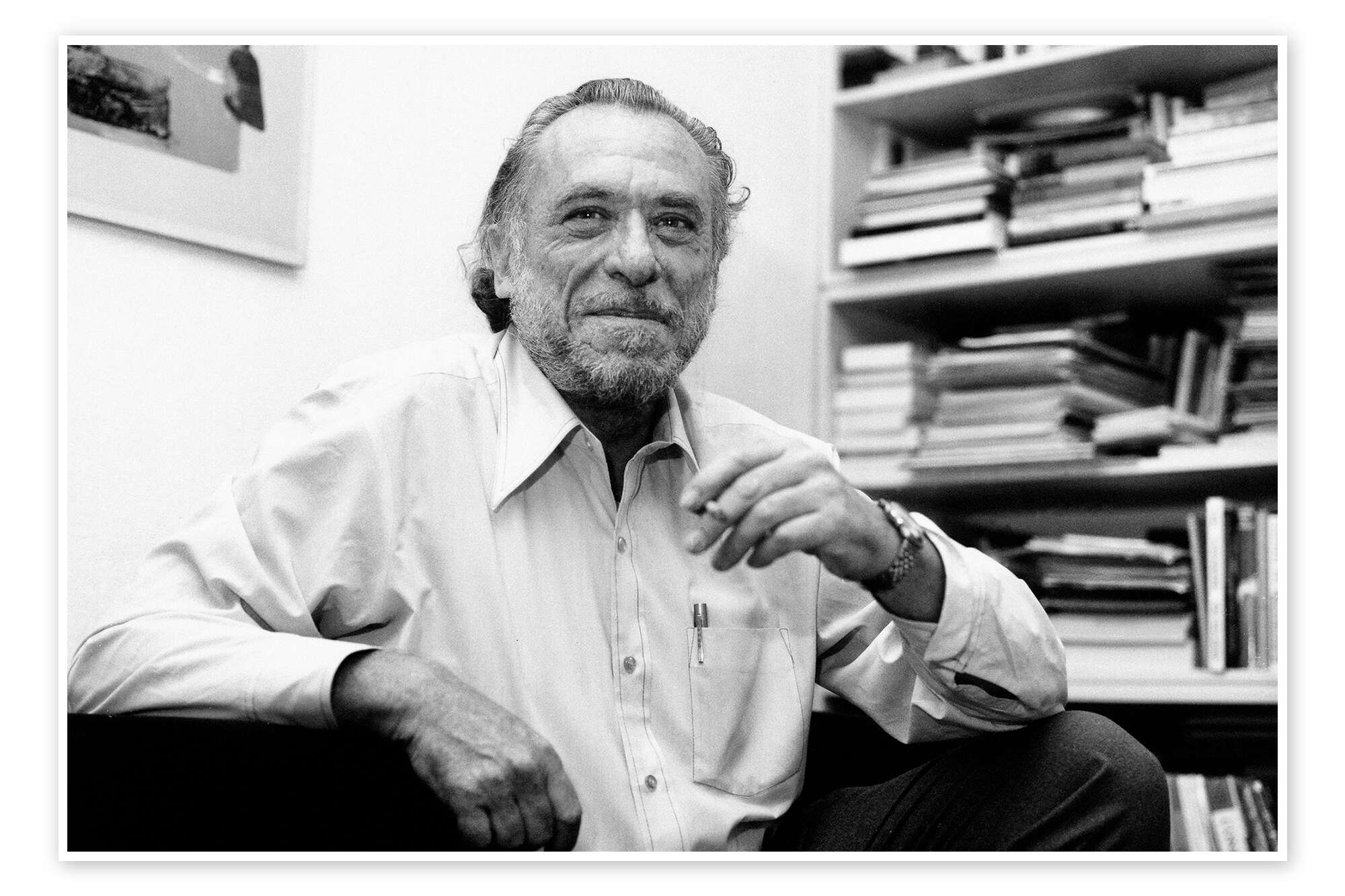
I welcome any chance, at any time, to talk about The Buk. For a few reasons: his work seems to become more relevant and prescient the further we descend into an all info-tainment media landscape where the disparities between haves and have nots becomes almost comically unbalanced and all by design.
But as both a writer and critic, I love to champion Bukowski as kind of an antidote for everything from overly academic prose to trend-chasing, soulless fiction, and as a man who — despite the multitudes he contained, many of them less than savory as he’d be the first to acknowledge — walked the walk in terms of where he found sources of inspiration, he is the anti-AI poet: he epitomized a sort of show don’t tell, you have to be among people and have experiences to fuel sensations and feelings that can be translated into worthwhile writing.
And last, his super power, aside from all the hype, was a consistent and extraordinary capacity for Empathy: like the great jazz musician Charles Mingus, he was an underdog, he championed the dispossessed and maligned, and made miraculous art during the most profoundly unhospitable circumstances.
His work, in light of decades of rejection and failure and industry indifference, seems to prove that real art made by real artists is ultimately not determined by tastemakers and gatekeepers, but — if given a chance — will connect with readers, finding them amongst people who look to art and see beauty and seek inspiration for the many ways the world doesn’t often create conditions that promote or tolerate beauty.
ii.
Charles Bukowski has long been an easy target, especially for the insufferable and self-appointed insiders of the literary scene. Sure, the macho posturing (although this dude at least knew how to throw — and receive — a punch, literally and better still, figuratively) is never a good look and looks worse the further it recedes in the rear-view mirror. And yes, the output, staggering as it is (listen, just the willingness to put the words down, day after day, separates the scribblers from the posers, the doers from the onanists with amazing networks who worry about everything except actually getting the work done), is hard to parse, and tends to separate readers into opposite camps: completists for whom too much is never enough, and the aforementioned prigs who would never sully their delicate sensibilities by reading any of his work, or admitting it’s any good.
The fact of the matter is, Bukowski’s fiction has aged quite nicely indeed; even surprisingly so, and everyone is of course welcome to pick and choose the poems of their liking, but even if his body of work consisted of a handful of poems (some beloved, others obscure), his legacy stands proudly alongside many, many academy-anointed lightweights (no need to name names, but suffice it to say, I find more joy and soul — and authenticity — in a single page of Bukowski than anything I’ve read by Jonathan Franzen).
As craven, selfish and short-sighted as many of our elected officials have been these past two years, don’t kid yourself about what’s at stake. Mediocrity and mendacity, appalling as these options are, still function as bruised and repurposed life rafts in times like these. And things stand to get a lot worse. Of course, the people who will feel it first are the people who are already crammed into the dirty and desperate margins. The people who will get it next are the ones whose understandable outrage is (typically, predictably) misplaced. And, with torches in hand, they will merrily lead the sociopathic foxes to the henhouses, where there is still unfinished business to attend to. Finally, for those whose fat wallets help them fall upward (every time), they will roll up their sleeves and get back to what they do best: making sure that everything they’ve got stays got.
iii.
Yes there’s data to crunch and yes we need to adapt and yes we need to tell better stories and prepare for new realities but there’s also very little new under the sun: just remember that The Buk had these shitheels in his sights half a century ago.
Beware those who seek constant crowds,
for they are nothing alone,
beware the average man, the average woman,
beware their love, their love is average,
seeks average,
but there is genius in their hatred,
there is enough genius in their hatred to kill you,
to kill anybody,
not wanting solitude,
not understanding solitude,
they will attempt to destroy anything
that differs from their own.
Not being able to create art,
they will not understand art,
they will consider their failure as creators
only as a failure of the world.
Not being able to love fully,
they will believe your love incomplete,
and then they will hate you,
and their hatred will be perfect,
like a shining diamond,
like a knife,
like a mountain,
like a tiger,
their finest art
One thing about Bukowski: he was not only not part of the academy or the elite, he was pretty much despised or ignored by those tastemakers and gatekeepers and, fortunately, he eventually had enough success that he didn’t have to rely on their insular, priggish, elitist (yes, elitist) cadre for support or approval. And he had them in his sights. But since he lived and breathed and struggled amongst not only the so-called common humanity, he saw them, too. Clearly. And he had the street level credibility to get them in his sights, and his assessments of what fuels ignorance, fear, and violence revolves around one single thing: hatred.
iv.
Henry Chinaski’s Horses*
He couldn’t face the words, he wrote,
until he made it back from the track.
For a man famous for his refusal
to use metaphors, telling it straight like a tire iron,
this one kind of crept up on him, like they do.
Sort of the way the so-called real world punches suckers.
But perhaps that’s still too affected by half, since
the only thing, we know, worse than too little
Truth is too much of the same old shit.
Anyhow, Hank had his horses and his handicaps,
like all of us, no matter what we tell ourselves.
Whether it’s humping a desk or hustling the Morning Line,
or finding other ways to avoid assenting to work
altogether, we all need patterns and schemes.
Because by regulating our routines, they free up aspects
of ourselves — otherwise unengaged, like our dreams and
imaginations:
Or else we’re out of time, out of our minds.
So Hank had his horses and they told him who he was
on any given day: a winner, a loser, a player — and blinkered
or busted or flush, he returned to his humble post position and
that typewriter, waiting for him and placing its own bets:
Was the master in form? Pulling up lame? Wielding his whip?
Could he coax them through the muck, past the front of the pack?
Ending with the ultimate trifecta: booze and women and words.
(Then pause for a money shot, parading past the Winner’s Circle.)
Success is a salve that quenches a cultivated kind of thirst, and
what matters, finally, isn’t how you walk through the fire, but
the resolve to put your feet forward in the first place,
urging all those ideas to sneak up like solved secrets:
Reminders that even Long-Shots need somewhere to go,
Some way to live.
*from my first collection, The Blackened Blues
v.
My thanks to the team at Art of Darkness for giving me a forum and opportunity to talk at length about Charles Bukowski. Please enjoy, below, and subscribe to this amazing podcast.
The Dark Room: Sean Murphy Talks Bukowski as Antidote to the Situation – Art of Darkness
Author and cultural critic Sean Murphy joins us in the Dark Room to talk Bukowski and how he speaks to our current…
