
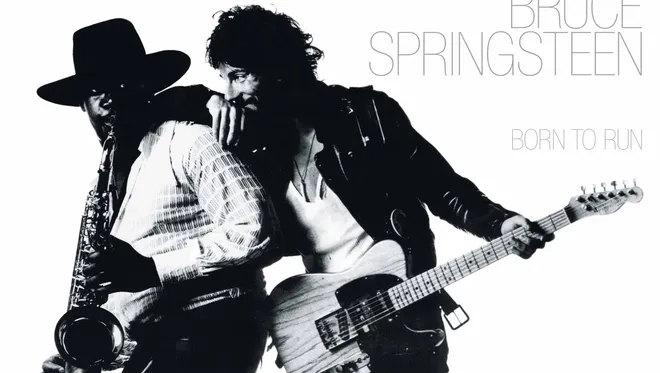
In a rather counterintuitive turn of events, the fact that the first two albums didn’t make as much noise as they could (or should) have ended up being the best possible thing that could have happened for Springsteen as an artist and us as an audience. Instead of packing it in, Springsteen quadrupled down and spent many subsequent months agonizing over every second of every new song, making the recording that ensured nobody would ever forget his name.
As has been amply documented, it was the lack of big-time success that ultimately convinced Bruce he had to put not only his oversized heart, but his mind, his soul and bone marrow into a tour de force no 25 year old had any business making. It could be said that the go-for-broke inspiration the Boss became legendary for providing in his songs initially sprang from the most authentic source: himself. As he grappled with how to translate the music he heard in his head, he gradually attained the ideal balance of more-is-more lyrics and epic scope with rawest and most honest emotion. The resultant material revolves around a theme that is basic as it is elusive: everyone wants to be fulfilled.
Every element comes together in the creation of rock’s mid-decade and post-Watergate response to the American Dream. Unlike his first two albums, where the narrators and heroes are kids in the midst of chasing shadows, making mistakes, or trying to escape their environment, on Born to Run, many of the protagonists have already seen and done enough to know that, for them, drastic action is required. There is an air of regret mixed with a not-yet extinguished defiance: the dream, whatever it may entail, is not quite dead. Thus the Romeo in “Thunder Road” declaring “it’s a town full of losers and I’m pulling out of here to win” and the defiance of the title track “we can live with sadness / I’ll love you with all the madness in my soul” and the affirmations of dudes and/or bandleaders knowing they got what they wanted in “She’s the One” and “Tenth Avenue Freeze-Out”.
There are also those unlikely to get away or win, those who already have the deck stacked against them and are either unable or unwilling to acknowledge it. Despite the driving pulse of “Night”, where the everyman escapes the daily boil of his dead-end job and irksome commute to simply feel alive by driving off to nowhere at night with the yellow lines racing by beneath him, we know these flights are fleeting.
While the restrained bordering on elegiac musical backdrop (just piano, bass, and a killer trumpet cameo by Randy Brecker) on “Meeting Across the River” strains in its solemn way to make a hero out of this nobody, the tension of the song is that while he stands to score two grand, there is just as good a chance that he is about to get whacked. The track neither ironic nor patronizing; the action (the song’s working title was “The Heist”) is relayed from this guy’s point of view (“Tonight’s gonna be everything that I said”), and there is little doubt what’s at stake: “We got ourselves out on that line”. We don’t get to find out what happens, and whether the setting is 1975, 1875, or 2025, we don’t really need to.
What else? Not much, except this masterpiece arguably has the best opening and closing songs of any album, ever. With “Thunder Road”, Springsteen condenses a full record (a full movie, really) into just under five minutes. Getting a proper handle on “Jungleland” would require more than a paragraph or even a full review, really. I took a crack at it a few years back, and even that feature hardly does it justice.
And there it is: after a couple of tentative years as an apprentice, this is when Bruce became the Boss, and regardless of how you feel about everything that followed, the work here sufficiently secures his status for all time.
