

Insights into music, mental illness, iconoclasm, and a particular American Genius
i.
First off, if you’re a jazz fan, you should be subscribed to Ethan Iverson’sinvaluable Substack Transitional Technology. If you don’t know him but his name sounds familiar, it may be because I shouted him out recently in my piece André 3000, AI, and the New Crisis of Cultural Credibility.
Check him out and you’ll see: he not only drops deep knowledge on all-things jazz, but he’s a pop culture obsessive, and I am both grateful and a tad envious that he can be such an accomplished musician and brilliant writer.
His most recent post is a transcribed interview from 2015 with the late, great Wayne Shorter (a lot more about him, by me, here). For those unfamiliar, he’s my brief intro to an artist I hold in the highest conceivable esteem:
Wayne Shorter is, for my money, possibly the most underrated genius in any genre of music. To be sure, he certainly received plenty of props within jazz circles and the people who know really know. In his wise, humble way, he always seemed cool with that. He was, from start to finish, one of the coolest customers, which made him that much more precious in a world filled with hucksters sucking on trends and posers faking it ’til they make it. (You could design a life course just based on his and his partner in crime Herbie Hancock’s personal and professional trajectories, and before even getting to the music, consider their Open Letter to the Next Generation of Artists.)
Not as instantly accessible as his closest compatriots in the all-time canon, John Coltrane and Sonny Rollins (both of whom could, if one cared about such things, be crowned best ever at what they did), Shorter obliges the listener to accept and then embrace him on his terms. For the unfamiliar, much of Wayne’s work is like, say, imported dark chocolate. Or fresh Kona coffee beans. Or a 2014 Brunello di Montalcino (or a 1964 Brunello di Montalcino for that matter). Or whatever type of car people who appreciate cars get excited about. You get the picture. Wayne Shorter is, in other words, the authentic item that aficionados savor, but whom virtually anyone with unpolluted ears can immediately appreciate.
Back to Iverson. What an opportunity he had, to be in the presence of greatness (Wayne in full Lion in Winter mode, still performing, still totally present, engaged, and performing at a high level). Even if you’re not into jazz, this conversation is enthusiastically recommended, because, among many things, it showcases observations from one of the great musicians and thinkers of the 20th Century, it provides unpretentious insights into the process of art-making, it is a succinct encyclopedia of call-outs and anecdotes, including titans like Charlie Parker (!), John Coltrane (!!), and, of course, Miles Davis (!!!).
ii.
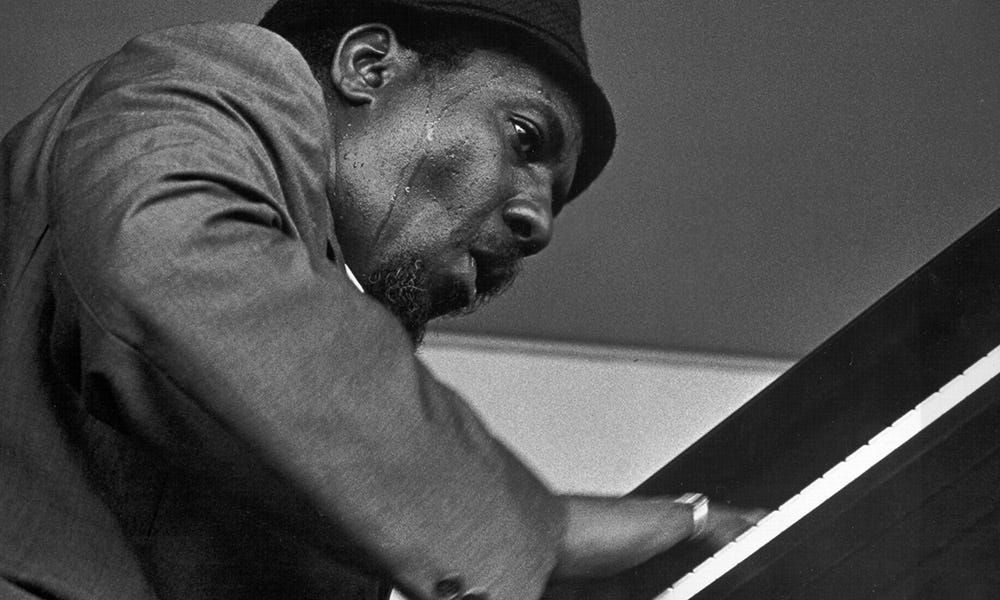
But, for me, the singular highlight is this recollection from an encounter with the inimitable Thelonious Monk. Here’s a snippet:
Anyway, later the Messengers were at the same London hotel. Art said, “Let’s go to Monk’s room.”
Art said, “Nellie, Thelonious is throwing money out the window,” and she looked down there and saw down in the street the police, the “Bobbies,” they called them.
Sometimes when Monk talked he’d grind his teeth together. He said, “The Bobbies need this stuff. They’re walking around without any weapons; they’re underpaid.”
EI: Just to be extra clear: Thelonious Monk was in a London hotel room, throwing five-pound notes out the window?
WS: Out the window. He had a Fu Manchu thing on, the Chinese robes and everything, big sleeves. Here comes the five-pound notes, flying out the window. Just letting them float down. “The bobbies needs them. They’re underpaid. No weapons.” [laughs]
The OMG levels are, for me, off the charts here.
That’s not merely an amazing, almost literally unbelievable anecdote. It’s a ten part documentary, an entire history of a musician, a type of music, a type of person, a unique person, an authentic American genius, a story filled with pathos, glory, redemption, unresolved conflict. So much more.
(Props, again, to Ethan Iverson: not only for being an accomplished musician in his own right, but being an insatiable fan of the idiom, many idioms, and consuming at his voracious rate, and then sharing it, wanting to promulgate the stories, shine a light any way he can as often as he’s able.)
I read that and, knowing Thelonious Monk and deeply loving his music over decades, “get it.” (Even as I acknowledge I know little to nothing about this man, or any human being, particularly ones as brilliant, complex, and unknowable as Monk.) If you’ve heard some of the music, you know. If you’ve seen (or even read) an interview with him you know. If you’ve seen video of him performing you know. If you’ve seen video of him getting up and dancing around the stage, mid-performance, you know.
These stories are a history of the pressures of being, in no particular order, a black man, a black man in America, a black man in America mid-century, a black man who happened to be a genius, a black man who was a genius, in mid-century America trying to make a living in an environment when every conceivable obstacle (cultural, practical, logistical, financial, legal) was placed in his path, and a black man who struggled with undiagnosed mental…well, I hesitate to say “mental illness” because, even in 2025, there are inexorably negative connotations, which is why so few people are still able or willing to openly and honestly discuss such matters.
Perhaps it’s both better and more accurate to say: someone who wrestled with a sometimes recalcitrant mind, meaning, the same brain that made this music also could be an anchor, a weight that made the banality of existence — something non-geniuses and many folks navigate unthinkingly — an intolerably arduous chore, the same wellspring of creativity and purpose also a darker energy that could corrupt focused thought and prey upon the vulnerabilities it created (not unlike a wave crashing ceaselessly against a coastline: creating dunes but eroding entire landscapes). We need not get mystical and insist these special creative people were “touched” or that the literal mental illnesses that impacted and, in some instances, derailed lives were necessary, or part of the bargain.
Rather, they were — and are — things that can be better understood, more carefully managed, harnessed so that some of the sensitivity and empathy they amplify are undercut when heavier or more negative vibrations rattle around. In the final analysis, at least as it relates to Monk, there is plenty of blame to pass around: at America, at a system that hampered him (how much more miraculous music were we denied just because our country was the way it is?), and also, ultimately, a concession: we are so indescribably fortunate to have him in the first place. And there’s a million-part documentary implied in that observation: about art, why it matters, why we love it, why we must support it, and so on.
(To be cont’d because, of course.)
iii.
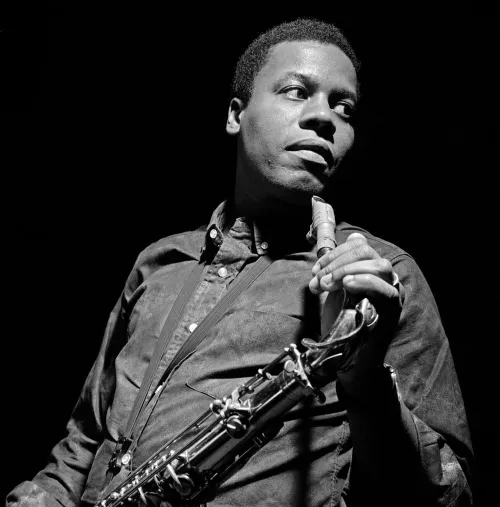
A bit more from my lengthy tribute to Wayne Shorter.
Clichés be damned: Shorter was on a quest and his music was a spiritual as anyone’s — including Coltrane, Albert Ayler, and Pharoah Sanders; and yes, including Bach, Mozart, and Beethoven — alongside these artistic icons, he took everything that had been done before and perfected it, and then continued pushing the boundaries. Monastic and always willfully eccentric about his craft, there’s no doubt his highest goal was using his talent in service of the extraordinary: I’m not certain any musician has captured ecstasy in sound with the purity and consistency of Shorter, his solos so assured and ebullient they brim with everything positive about existence, becoming heroic in their way.
Ultimately, Wayne Shorter matters for the same reasons art matters. Because he dedicated his life to the service of Beauty, creating works that made the world demonstrably better (How can I prove this? By offering myself up as Exhibit A, and I’d happily bet my life there are thousands, if not millions, who would say the same). Because in this world, where evidence of our intolerance and mendacity is ever on display and amply illustrated via our lust for competition, our reckless pursuit of material toys, and the utter lack of imagination and soul by which we measure our worth in ways that create war, inequity, and disconnection, the very best amongst us spend innumerable hours, alone and with little — if any — encouragement or reward, in pursuit of something only humans can create; things that remediate barriers of language, class, and culture; things that augment a tradition tracing back to illiterate creatures scrawling primitive images on cave walls; things that remind us we’re alive and that we matter — that drawing a single breath in this universe entitles us to solace, healing, and the restorative beauty of stories told. We’re fortunate to have benevolent masters who occasionally appear, helping guide us to a more peaceful and productive path.
