
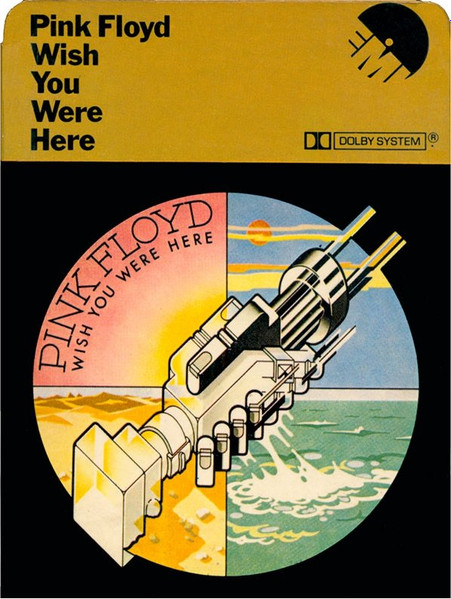
It isn’t that Pink Floyd made some of the best albums of the ‘70s (they did), or that Pink Floyd moved the art form forward (they did); it’s that Pink Floyd did the impossible: they made music that can’t be marginalized, and more than any other band, brought progressive rock into the mainstream. This, along with the unparalleled streak of top tier albums they created, elevates them above all others as the prototypical and most significant prog band.
As much praise as the group rightly receives, they may not be fully appreciated for the ways they changed the future of music. The Dark Side of the Moon did for progressive music what Sgt. Pepper did for rock ‘n’ roll: elevating it from pop to art, and through one indelible and irrevocable triumph, granted authenticity—for all time—to an entire genre. It simply cannot be overstated how meaningful it was, and remains, that one of the best-selling and influential albums in history happens to be the apotheosis of prog rock’s canon. In short, Pink Floyd made it not only possible, but inevitable that other bands would attract more—and more serious—scrutiny, however much many of them suffered by comparison. (My album-by-album analysis of the band’s output can be found at “All Things Reconsidered: Why Not Pink Floyd?”, 11 November 2011.)
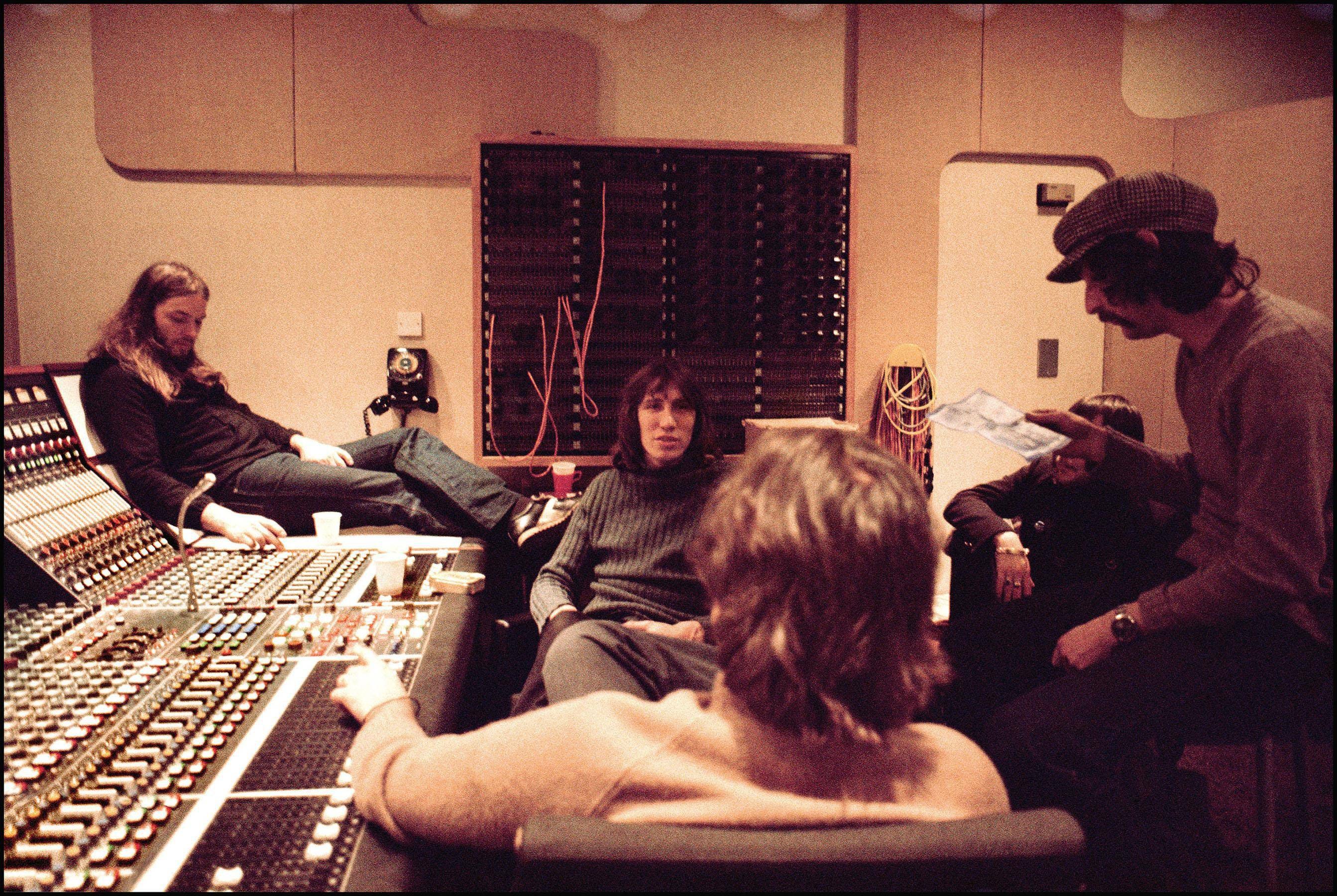
Beginning with The Dark Side of the Moon and stretching through The Wall, Pink Floyd at once exemplified prog rock while transcending it. Every work was a perfect calculation; from the album art to the sequence of the songs, each entirely convincing on its own but an irreplaceable part of the whole. Considerable credit must be given to Roger Waters who, through a tense combination of talent, ego, and will, claimed ultimate control of the band’s direction. His acerbic personality and control freak tendencies took their toll, inexorably leading to his departure and one of rock music’s most bitter, protracted soap operas. But attention must be paid: his drive and vision demanded indelible work that may otherwise have been merely excellent.
A well-documented instance would be the two songs that served as prototypes for later masterpieces. “Raving and Drooling” and “You Gotta Be Crazy” were road-tested contenders for inclusion on The Dark Side of the Moon‘s follow-up. If the rest of the band had had their way, they would have comprised one side of the new album while “Shine On You Crazy Diamond” would have run, uninterrupted, on the other. Waters was not satisfied and, judging from the fascinating but far from flawless live versions, he was correct.
As a result, he busied himself on a set of new songs that became “Welcome to the Machine,” “Have a Cigar,” and “Wish You Were Here”—a triptych of disenchantment, regret, and bereavement that are crown jewels in the Pink Floyd canon. As important, the temporarily sidelined songs were refined and reworked into Waters’ most cohesive concept album, Animals. With major contributions from Wright and Gilmour, “Sheep” and especially “Dogs” represent some of the best work the band ever did.
Waters, illustrating curmudgeonly tendencies as early as the recording of The Dark Side of the Moon (captured for posterity in the remarkable Live at Pompeii documentary), but having axes to grind—and never too carefully, Eugene—going back to “Corporal Clegg” on A Saucerful of Secrets (’68), was really hitting his sardonic stride by the middle of the ‘70s. Importantly, though, while he shoveled out the scorn like few before or since, it would be wrong to label Waters a misanthrope; certainly he’s happy (or miserable, for that matter) to point out the myriad foibles of mankind, but there was always hope, if never quite optimism, lurking beneath the surface. By the time of Wish You Were Here, Floyd had perfected their presentation: the music they created suitably complemented Waters’s acerbic lyrics.
Certainly songs like “Have A Cigar” and “Wish You Were Here” speak to Loss with a capital L: loss of innocence, loss of intimacy or loss of connection(s) to others as well as oneself. “Welcome to the Machine” manages to condemn stardom, the system (military, corporate, entertainment) and the eventual disenchantment that follows success, all while creating a seven minute soundtrack to make Dystopia sound at once inevitable and irresistible. An acoustic-based song is soaked with sound effects, Rick Wright’s one-man-band of keyboards and suitably disaffected vocal from David Gilmour. It’s to Waters’s credit that the song can function on several levels: as an obvious shot at the music industry (amusing sidenote: the lyrics for “Have a Cigar” were so astringent Gilmour declined to sing them, which led to Roy Harper stepping in for his famous cameo), it’s also another in a series of touching tributes to Syd Barrett (“you dreamed of a big star/you played a mean guitar”), and a coruscating ode to estrangement.
The centerpiece, and the composition that easily ranks as one of the best and most significant (and most consistently satisfying) in all prog rock, is “Shine On You Crazy Diamond”—equal parts elegiac tribute to an old friend and assessment of loss and alienation. Waters, understandably struggling with what to do next after Dark Side, began thinking about the man without whom he may never have become a rock musician. Syd Barrett’s mental disintegration is alluded to on the previous album’s “Brain Damage,” but all of the tracks on Wish You Were Here deal, directly and indirectly, with the man who named the band’s breakdown (A great deal more about Syd, his import, and his legacy, here). Gilmour and Wright both sought to play the saddest notes they could conceive, and the results are at once poignant and stunning. Even without the lyrics, it would be abundantly obvious that the band was attempting to invoke a wistful sort of melancholy that stops just short of desolation. It was inevitable, and appropriate, that Waters chose to sing these lyrics—so personal and plaintive—and it is without question his most affecting vocal performance.

Then there is the story, confirmed by all members present at the recording, which has to be apocryphal except for the fact that it isn’t, and is enough to make you concede that forces greater than us may indeed have the controls set for the heart of the sun. The band, busy completing the final mix of the album (allegedly working on “Shine on You Crazy Diamond”), did not notice the bigger, bald stranger who had wandered into the room; only after several moments did anyone recognize their former leader. At one moment jumping up and down to brush his teeth with his fingers (a pitiful sight that reduced Waters to tears), the next Barrett was offering to add his guitar parts to completed work. Upon having his services politely declined, he walked out of the studio and no one in the band ever saw him again. As touching, and extraordinary as this stranger-than-fiction occurrence might be, it only adds to the already unqualified masterpiece that Pink Floyd created, turning loss and despair into something inexplicably moving and awe-inspiring.
