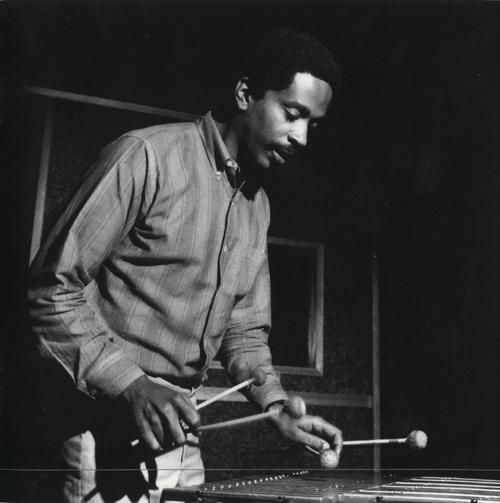
Bobby Hutcherson was not just a major, and positive force for good in the jazz idiom, he was a genuine innovator. Before him, the vibraphone was largely considered a novelty instrument and, despite the obvious advancements of the incomparable Lionel Hampton and Milt Jackson, Hutcherson was part of the post-bop vanguard, and he made the vibes not only acceptable, but cool.
And, of the many accolades Hutcherson deserves, being cool defines both the man and the era he became an indispensable part of. After the high water mark of 1959, the avant-garde moved, increasingly, to the forefront and with this “new thing”, epitomized by Ornette Coleman and the polarizing free-jazz he pioneered, jazz became, take your pick: less cool, less accessible, more adventurous, more encompassing. It was all those things, and many more.
If Miles Davis and — at least for a couple of years before he blasted into the stratosphere — John Coltrane, were ambassadors for the future of this music while remaining mostly within the orthodox or accepted bounds of jazz, the aforementioned Coleman along with, just to name a handful, Albert Ayler, Cecil Taylor and Archie Shepp, were already straining at convention and taking jazz places even ardent fans found difficult to follow.
Somewhere in the middle, another young breed of innovators arrived on the scene: Wayne Shorter, Herbie Hancock and Bobby Hutcherson were among the better regarded (and received) practitioners of new jazz with old(er) school appeal. And like Shorter and Hancock, Hutcherson established himself first as an invaluable session player (doing remarkable work with Jackie McLean, Grant Green and Eric Dolphy) and, eventually, emerging as a leader to be reckoned with.
In hindsight, Hutcherson had the perfect approach for the perfect instrument: his work has aged extraordinarily well (not unlike Shorter’s and Hancock’s, for that matter) and what once pushed some boundaries now seems accessible without feeling conservative, it’s conversant without a hint a cliché, and it’s mellow without ever being predictable. This is the type of jazz you can put on for the proverbial dinner party (assuming anyone has dinner parties or listens to jazz; if anyone listens to jazz at dinner parties, please invite me.) In short, it’s cool.
His work is worth exploring, and will reward even a slightly sensitive listener. Virtually any session he led or participated in throughout the ’60s is recommended without reservation.
Speaking personally, the pleasures his work has provided me are too extensive to count; suffice it to say, I’ve cherished him and will continue to do so, while being grateful we had him amongst us as long as we did. Here then are five personal favorites, any of which should prove addictive.