
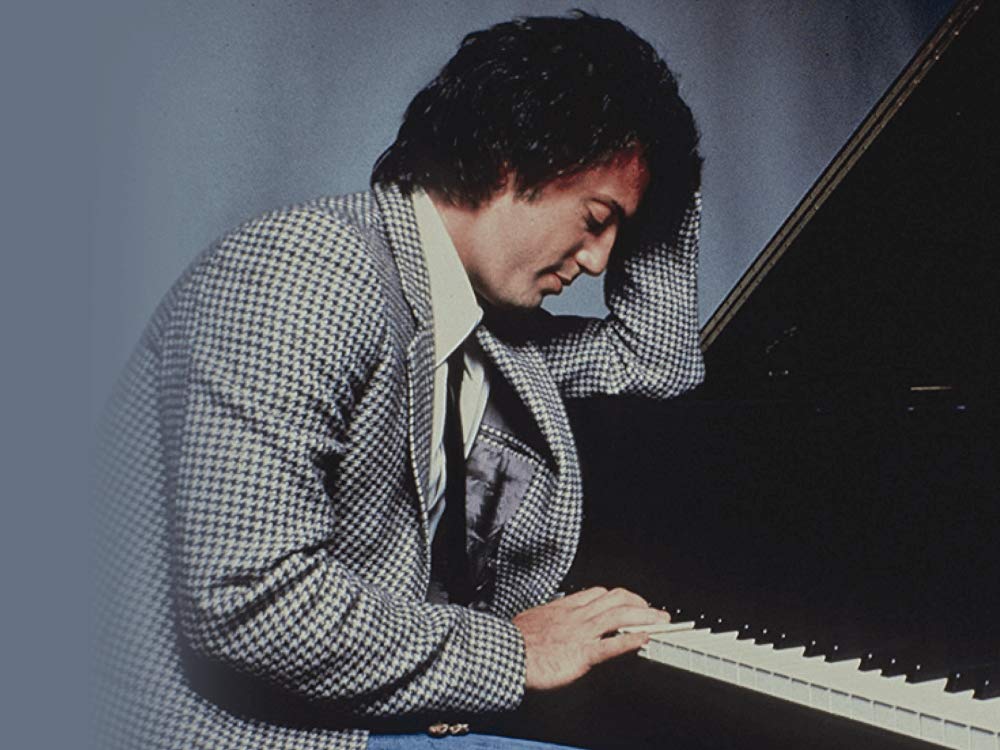
Five hours is a lot of time to spend with Billy Joel.
But it’s worth it. And he deserves it. He’s earned that, as far as I’m concerned. For all the pleasure he has (and still does) provide me, through his music, the least I can do is pay tribute and honor him properly while he still walks amongst us (way too often, especially in America, we wait until our beloved are deceased so we can eulogize them). More, poor Billy, despite his success, has taken his share of kicks, and he became the consensus guy to kick around, particularly by critics (some genuine, many opportunistic, most forgotten and forgettable) and his music — which is the only important thing — endures.
That said, some of the criticism he receives is at once on point and entirely above board: I hear a song (which, to Joel’s eternal credit as a genius for melody, I find myself nodding along with, however reluctantly) like “The River of Dreams” and think: this guy is accused of being a tad too opportunistic and derivative and what do we have here? A pastiche of earlier Paul Simon who himself occasionally phoned in pastiches of earlier and better soul and gospel grooves?
But like another punching boy of the rock establishment Phil Collins, it’s safe to predict many of the songs we’ve known and loved will be recycled — and savored — through future generations. It also occurs to me that, with the benefit of time, hindsight, and decades in the cracked rearview, Billy Joel is not unlike Paul McCartney. In superficial, obvious ways, sure. But also in deeper ways: Joel’s better songs are like well-built houses in that they’ve survived time and tempest and they still stand; they have solid foundations and are now part of the landscape, artistically and culturally speaking.
Sure, Joel emulated the Fab Four, and it’s hard to hear any of his late ’70s ballads without seeing this guy (to the extent that “Through the Long Night” could be declared, only with modest sarcasm, the best Macca solo tune, if not an outtake from a mid-60s Beatles album. It’s a master class in tribute, semi-imitation, but it’s also an absolute slam dunk — filled with harmonies, melody, and the thing phony artists can never successfully fake: feeling).
But it’s more. The two things no one — including Joel and Macca — can deny are that their songs at times are sentimental, syrupy to a fault, and they’d never be considered cool as their principal peer (Lennon in Paul’s case; Springsteen in Joel’s), and where Bruce and John have always been critical darlings, Paul and Billy tended to get beaten up.
It’s been gratifying, if overdue, to see Paul enjoy his very extended victory lap, and consensus come around that he was every bit Lennon’s equal, if not his superior — as bandmate, musician, human being. Similarly, Joel’s recorded legacy (particularly his prime decade from early 70s to early 80s) has been established, part of the permanent record, long enough that we can now assess and opine — soberly and without a great deal of the snark and gossipy baggage that polluted previous appraisals of his albums.
How often was he Perfect with a capital P? Let debate rage. I’ll offer up this, the opening track from his mega-breakthrough The Stranger, and say it’s as good as anything anyone’s done in the pop-rock idiom: full of attitude, insight, humor, anger, and joy. Oh, and it has not aged. Indeed, it’s almost undoubtedly more relevant and pertinent to our late-stage capitalism moment of info-overload, more hustle, everyone busy being the star of their own story era. (It also has a distinctly punk energy but with brains and purpose, something cosplaying critics with their Sid Vicious t-shirts could neither grasp nor embrace.) Other songs will be discussed shortly, but my opening salvo is thus: if I’m going into battle with Billy Joel catalog, I’ll fight on this hill. And I’ll win.
Let me get it again.
Time has been (and I’m betting will be) remarkably, perhaps extraordinarily kind to Joel’s best work. For one thing, they are absolutely airtight gems: you simply can’t crack the glistening bulwark of tunes like, just to name a handful, “Movin’ Out,” “The Stranger,” “Vienna,” “Allentown,” “You May Be Right,” “My Life,” “Don’t Ask Me Why,” “Only the Good Die Young,” “Say Goodbye to Hollywood.” Then there’s the aforementioned shmaltz, which cannot and will not be denied (no matter how sick of them you are): “She’s Always a Woman,” “Just the Way You Are,” “Honesty,” “She’s Got a Way.” There’s the insufferable but irresistible handful from his mega-smash An Innocent Man: “Uptown Girl,” The Longest Time,” “Tell Her About It,” and, I guess, the title track. There’s the second-tier stuff: “Captain Jack,” “The Entertainer,” “Pressure,” pretty much everything else from Glass Houses (pound for pound his other masterpiece, after The Stranger?), “Big Shot,” “Goodnight Saigon,” and “Miami 2017 (Seen the Lights Go Out on Broadway)”. And we’ll always have — for better and worse — “Scenes from an Italian Wedding,” and, of course, “Piano Man.”
Your mileage and personal favorites will vary, but the songs listed above are pretty much just the hits — there are dozens of other worthy entries (some like “Prelude/Angry Young Man” which I’d take, others like “We Didn’t Start the Fire,” which I wouldn’t), and once you step back and assess, we’re looking at a career that goes toe to toe, pop music and pop culture wise, with any other American singer-songwriter.
And let’s get out of our ivory towers and acknowledge: Joel — like virtually every other pop star from the last 50 years — wrote a lot of forgettable lyrics. But he also wrote some stunning words that stay written.
They’re sharing a drink they call loneliness/But it’s better than drinking alone.
Sergeant O’Leary is walkin’ the beat
At night he becomes a bartender
He works at Mr. Cacciatore’s
Down on Sullivan Street
Across from the medical center
And he’s tradin’ in his Chevy for a Cadillac (ac-ac-ac-ac-ac)
You oughta know by now (you oughta know by now)
And if he can’t drive with a broken back
At least he can polish the fenders.
(Let me repeat that:
And if he can’t drive with a broken back/At least he can polish the fenders.)
I’ve been stranded in the combat zone
I walked through Bedford Stuy alone
Even rode my motorcycle in the rain
And you told me not to drive
But I made it home alive
So you said that only proves that I’m insane.
You didn’t count on me, you were counting on your rosary.
and
Said your mother told you all that I could give you was a reputation
Aw, she never cared for me
But did she ever say a prayer for me?
Every child had a pretty good shot
To get at least as far as their old man got
But something happened on the way to that place
They threw an American flag in our face.
and
Well I’m living here in Allentown
And it’s hard to keep a good man down
But I won’t be getting up today.
Though you drown in good intentions
You will never quench the fire
You’ll give in to your desire
When the stranger comes along.
(*Sidenote: As the incredible document above illustrates, Billy Joel has the goods and has always delivered, live. It’s not just nostalgia and super fans that explain why people have seen this guy in concert dozens of times. He never phones it in; never has. We forgive our favorite bands when they don’t have the same aesthetic juice, in person; it’s all part of the experience, and how can certain bands duplicate the energy and precision of a studio take, etc. Well, Joel is one of the exceedingly rare musicians whose live renditions equal or surpass the tracks from individual albums. Take a test drive and see for yourself. I was already a fan, early 80s, when The Nylon Curtain dropped, and it was a genuine revelation when I saw his live set (on HBO?) and realized how incandescent his live act was. Dude is fucking en fuego.)
In fact — and assuming this is the correct concert that aired nationally — it was this specific song that rocked my 12 year old mind: pretty sure I’d never heard “Angry Young Man” and my introduction was, as I said, revelatory. As in, holy shit, who is this guy? And it makes perfect sense: the assholes who wrote for Rolling Stone and the rest of the Lester Bangs wannabes from the ’70s and ’80s who despised anyone that dared to sweat, who was too earnest, who couldn’t pretend to not care (or better still for these frauds, didn’t care), somehow hit too close to home, and had to be diminished, ridiculed. Indeed, these weren’t legit critics trying to write intelligently about the music and its cultural import, they were the actual nerds hanging around the locker room trying to get a pat on the back from the varsity football team (and hoping they wouldn’t get stuffed into a locker).
What I’m saying is, if a video like this — of a rich dude very obviously not going through the motions (indeed, incapable of doing so), running a tight band 100% locked and loaded, performing in a fashion that leaves him soaking wet after a gig, and is so clearly giving the paying audience what they want (the ultimate win-win that only athletic competition can approximate) — makes them uncomfortable because it’s all too…unaffected (too blue collar?) it goes a long way toward explaining why Democrats lose so many winnable elections.
Just kidding. Sort of.
It occurred to me, as I watched the entire odyssey of his career, start to finish, (listening to certain songs I haven’t heard in many years, including ones I’d not have chosen to hear but am glad I did, for the complete and unfettered perspective) that what confounded critics the most is how easy Joel made it seem. Kind of like Stephen King. Haters can hate, but both these guys just churned out hit after hit, and the more people responded, the louder and more virulent the browbeating. Whether either man was ever working hard (for the record, they were), they were always working — putting in the time, hammering nails, laying foundation, and building their artistic castles. Put simply, if you’re considered, however disingenuous the critic, either too lazy or working too hard, you’re in a box you’ll never escape from. That King and Joel have both chafed against this only proves they’re only human.
What I appreciated, taking the longer view of Joel’s commercial reign, is that he is, in fact, hard to pigeonhole. Was he the sensitive but jaded singer-songwriter of his early albums? Or was he the scrappy Long Island kid who told it like it was? Or the chameleon who — not unlike more beloved bands such as The Police and Rush — made albums that reflected the sounds of their times? Or was he the silky-smooth crooner who cranked out hit singles like a chicken laying eggs? Or the super earnest spokesman of the streets, one ear glued to CNN and the other listening to the conversation in the picket line? Yes. He is all these things.
Billy Joel is a rock star, a contradiction, an icon, a fan (of other rock stars, of the music), a piano player, a human being, full of vulnerability, unresolved conflicts, angers, pain, promise, peace. But above all, and what sets him above so many, he is a storyteller. He told stories, and the stories check out. They’re true. They resonate. They do what only the best art does, remaining fresh and imperishable. How does this happen? Well, it’s…complicated. Equal parts luck, hard work, and something indescribable that, clearly, Billy Joel himself can neither describe nor understand. That’s also called magic.
